A District Growing as Fast as the City Around It
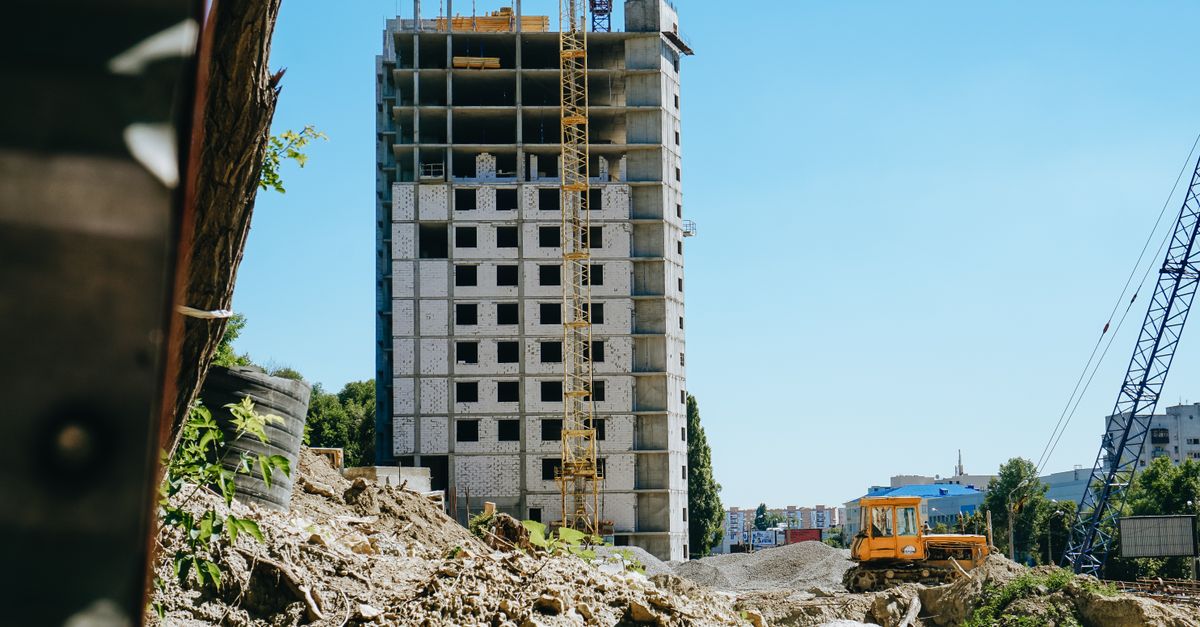
Drive almost any direction out of downtown Celina on a weekday morning and you will pass the evidence: concrete foundations rising from what was open prairie not long ago, subdivision signs staked along roads that barely appear on older maps, and yellow school buses navigating streets that planners are still figuring out how to widen. Celina has spent the better part of a decade being cited as one of the fastest-growing cities in the United States, and nowhere does that growth feel more consequential — more human — than inside Celina ISD.
This spring, the district reached a milestone that would have seemed distant just a few years ago. Celina ISD announced the naming of three new elementary schools, each one a marker of how thoroughly the community has transformed and how seriously district leaders are taking the responsibility of building educational infrastructure that can actually keep up.
For families who moved to Celina precisely because of its schools, the announcement landed as confirmation that the district intends to grow with intention rather than scramble to catch up. For longtime residents who remember when the entire district fit inside a handful of buildings, it is a moment that demands a pause.
What the Naming of a School Actually Means
It would be easy to treat the naming of three elementary schools as administrative business — a board agenda item, a press release, a line in the district’s news feed. But anyone who has spent time around a school community knows that a name carries weight far beyond a sign above the front doors.
School names become shorthand for identity. They show up on the backs of spirit-wear T-shirts worn at the grocery store. They are the first thing a kindergartner learns to spell that is longer than their own name. They are the answer a parent gives when a neighbor asks where the kids go. In a city adding residents at the pace Celina is, those names become anchors — small but meaningful ways of saying that this place has roots, that it is building something permanent.
Celina ISD has not announced the specific names publicly in detail beyond the confirmation of three new campuses, but the act of naming them signals that these schools are moving from concept to community institution. Construction timelines, attendance boundaries, and staffing pipelines all follow from that moment of naming.
A District Rewriting Its Own Scale
To understand why three new elementary schools matter so much right now, it helps to look at the broader picture of what Celina ISD is managing. The district serves a city that has been tracked among the nation’s fastest-growing communities, and the pressure on school capacity has been relentless and ongoing.
New subdivisions in Celina do not fill in slowly. They arrive in waves, and each wave brings families with children who need classrooms, teachers, counselors, librarians, and gymnasiums. The district has had to think years ahead, securing land and planning campuses before the students who will fill them have even moved to town.
Adding three named elementary schools in a single announcement is not a routine expansion. It represents a significant leap in the district’s footprint and a substantial commitment of planning, resources, and community trust. Each campus will need to be staffed, equipped, and integrated into a district culture that Celina families have come to value.
Alongside the school-naming announcement, the district has also organized a Kindergarten Parent Orientation for summer 2026, a program aimed at helping incoming families — many of them new to Celina and navigating an unfamiliar system — prepare for the school year ahead. That kind of deliberate outreach reflects an awareness that growth brings newcomers who need more than just a seat in a classroom. They need a point of entry into the community.
The People at the Center of It
Behind every new school are teachers who will spend their careers there, principals who will set a tone that outlasts any single administration, and families who will organize their entire daily rhythms around drop-off and pickup. In a district the size Celina ISD is becoming, keeping that human texture intact is one of the harder challenges of rapid expansion.
Celina has historically punched above its weight in that regard. The district has cultivated a reputation — earned through years of investment by both staff and community — for feeling like a place where people know each other, where teachers stay, and where school events draw real crowds. Whether that culture can be sustained and replicated across new campuses is the central question that the coming years will answer.
The naming of these three schools is the first chapter of that answer. Each campus will develop its own personality over time, shaped by the students who fill its hallways, the staff who build its routines, and the neighborhood that forms around it. In five years, those names will mean something specific to the families who chose them as a home base.
The Civic Dimension of School Growth
There is a civic argument to be made for why a city should care about school expansion even if it has no children enrolled. Schools are among the most powerful drivers of property values and neighborhood cohesion. They are where communities practice the work of raising the next generation together, across the ordinary differences that divide adults elsewhere. They are also significant local employers, drawing teachers and support staff who live, shop, and participate in the community around them.
Celina’s growth has brought enormous opportunity and genuine strain in equal measure. Infrastructure of every kind — roads, utilities, parks, civic buildings — is being built or expanded to keep pace. The Downtown Center under construction is one piece of that picture. The Storybook Trail at Old Celina Park is another, smaller one. And three new named elementary schools are a third, representing the kind of long-term investment that shapes what a city becomes over generations rather than just years.
The Celina ISD Board of Trustees holds its regular public meetings at Moore Middle School at 300 E.G.A. Moore Pkwy., with the next session scheduled for June 22, 2026, at 6:00 PM. Those meetings are open to the public under the Texas Open Meetings Act, and they are where decisions about campuses, boundaries, and budgets get made in view of the community those decisions affect.
What Comes Next
For Celina families with children approaching elementary age, the addition of three new campuses means more options, shorter commutes, and — eventually — smaller class sizes as enrollment is distributed more widely across the district. For the district itself, it means the work of building three school communities more or less from scratch, a challenge that is logistical and cultural in equal measure.
For the city as a whole, the announcement is a reminder of the scale of what is happening here. Celina is not growing in a way that leaves institutions scrambling to catch up years after the fact. The schools are being built. The names are being chosen. The orientation programs for incoming kindergarten families are being scheduled.
That is what a community looks like when it is trying to grow on purpose.